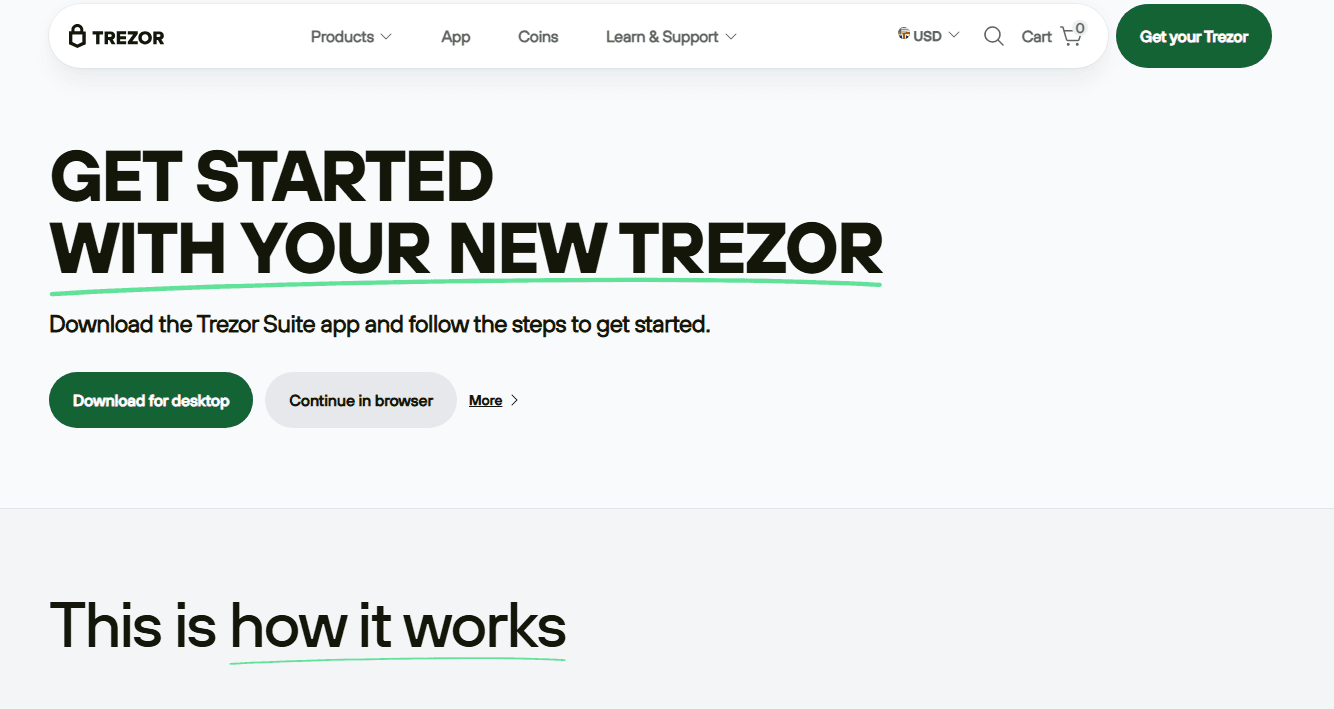
Trezor.io/Start – Official Setup Instructions for Your Trezor Hardware Wallet
Introduction: Protecting Your Digital Wealth
Cryptocurrency ownership means you are responsible for securing your assets. Leaving funds on an exchange exposes them to cyberattacks or account restrictions. A Trezor hardware wallet eliminates these risks by storing your private keys offline. To activate your Trezor Model One or Model T, the correct and official setup path begins at trezor.io/start. This guide explains the full process and the best practices to keep your coins safe for the long term.
What Makes Trezor the Trusted Hardware Wallet?
Trezor offers several benefits that make it the preferred option for crypto holders:
Private keys never touch the internet
Access requires both the device and a PIN
Open-source security framework
Easy portfolio control with Trezor Suite
Compatible with leading cryptocurrencies
Trezor ensures the highest level of protection while still being simple enough for beginners to manage.
Step 1: Verify Your New Device
When you receive your Trezor, inspect the packaging carefully:
Hologram sticker should be firmly attached and undamaged
Box should look original and unopened
Device should be free of cracks or scratches
If there is any suspicion of tampering, stop using the device and contact customer support. Security begins with hardware integrity.
Step 2: Visit Trezor.io/Start to Begin Setup
Using a desktop browser, manually type:
trezor.io/start
Avoid following links from emails, pop-ups, or unverified sites. Fake phishing pages can imitate the real one and steal personal information.
On the official page, choose your Trezor model and follow the guided steps provided for your specific device.
Step 3: Download and Install Trezor Suite
You will be prompted to download Trezor Suite, the management application that enables:
Sending and receiving crypto
Checking account balances securely
Adding supported coin accounts
Monitoring asset growth
Using advanced privacy features
Select your operating system (Windows, macOS, Linux) and complete installation. The desktop version is the safest way to interact with your wallet.
Step 4: Connect Your Hardware Wallet
Use the USB cable that came in the box to connect Trezor to your computer. Once connected, Trezor Suite will automatically detect your device and display the setup dashboard.
Choose:
Create Wallet if you are starting fresh
Recover Wallet if you already have a backup recovery seed from another Trezor
Step 5: Install Latest Secure Firmware
New Trezor devices do not come with firmware installed. Firmware acts as the secure internal software powering the wallet. Follow prompts to install the newest version.
⚠️ Keep the device plugged in — do not interrupt firmware installation.
Keeping firmware current ensures protection from known threats and supports additional cryptocurrencies.
Step 6: Backup Your Recovery Seed
The most important part of setup now begins: your Recovery Seed. Your Trezor generates a unique series of 12, 18, or 24 secret words. Write these words by hand onto the provided recovery cards.
Security rules:
✔ Store offline in a locked location
✔ Double-check each word and spelling
✔ Keep the card away from moisture, loss, or fire
🚫 Do not save digitally
🚫 Do not share it
🚫 Do not upload or photograph the seed
Anyone with these words can take your funds. Treat them like the key to your personal vault.
Step 7: Create a Strong PIN Code
Before accessing the wallet, you must set a PIN. Your PIN:
Prevents unauthorized access
Must be entered to confirm every action
Should remain private
Avoid easy numbers like 1111 or birthdays. The device enforces time delays for wrong PIN attempts to stop brute-force attacks.
Step 8: Add Cryptocurrency Accounts
Your Trezor is now ready to manage digital assets. Inside Trezor Suite, you can add accounts for multiple supported coins such as:
Bitcoin (BTC)
Ethereum (ETH)
ERC-20 tokens
Litecoin (LTC)
Many more
Every account is protected under the same offline security structure.
Step 9: Send and Receive Crypto Safely
To receive funds:
Click "Receive"
Display the receiving address
Verify the address shown on your computer matches the one on Trezor’s screen
This step blocks malware from changing destination addresses.
To send funds:
Enter the recipient’s address and amount
Confirm final transaction details on the hardware screen
Approve the transaction physically on your Trezor
No transaction can be sent without your interaction — a vital security advantage.
Additional Trezor Security Tips
Enhance your protection using:
Passphrase feature for hidden wallets
Shamir Backup (Model T) for multi-share seed security
Regular firmware and Trezor Suite updates
Physical protection when traveling
Your crypto remains safe as long as the device and seed are protected.
Wallet Recovery Options
If your Trezor is:
🔹 Damaged
🔹 Misplaced
🔹 Lost
You can recover your wallet using any BIP39-compatible hardware wallet, including a new Trezor device.
However:
⚠️ If both the device and recovery seed are lost, your crypto cannot be restored.
This is why backup storage is critical.
Conclusion
The safest way to protect cryptocurrency is by using a hardware wallet — and the official setup always begins at trezor.io/start. Trezor provides full ownership of your digital assets without relying on centralized exchanges. By following the proper setup procedure and applying recommended security layers, you keep your crypto protected from theft, hacking, and online risks.